12 nov.
Câine pierdut
Răzbunare creativă 

| Ea vine de la moară; Şi jos în ulicioară Punându-şi sacul, iacă Nu-l poate ridica. - „Ţi-l duc eu!” - „Cum?” - „Pe plată!” Iar ea, cuminte fată, Se şi-nvoieşte-ndată. De ce-ar şi zice ba? |
Home walked she from the mill Her sack was down and she Could not lift it again. „May I help?” „What?” „For pay!” And in the narrow lane Good girls shouldn’t wave away Such offers and say „nay”. That she agreed was plain. |
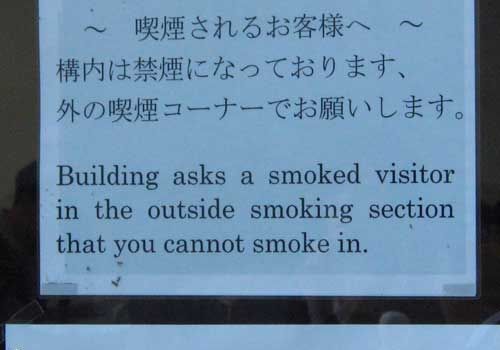
Cine a făcut traducerea în engleză probabil încerca să se lase de fumat şi stresul a condus la atâtea greşeli 
Cuvintele „than” şi „then” sunt asemănătoare atât ca scriere, cât şi ca pronunţie, ceea ce face ca uneori să fie confundate. Totuşi, sensurile lor sunt complet diferite.
Conjuncţia „than” înseamnă „decât”/”de”/”ca”, atunci când este vorba de comparaţii. De exemplu: „Imagination is more important than knowledge”.
Pe de altă parte, „then” înseamnă „atunci”/”apoi”/”pe urmă”, fiind folosit pentru a specifica o ordine temporală. De exemplu: „You have to learn the rules, then you have to play better than anyone else.”
© 2026 blog.ro-en.ro